


Cricket Betting for Beginners Works Best When You Start with One Market
When I placed my first cricket bet in 2017, I tried to be clever. I backed a treble across three markets I barely understood — top batsman, powerplay runs, and match winner. All three legs lost. The lesson was expensive but simple: start with one market, learn it thoroughly, and add complexity only when you’re consistently making informed selections. Every successful bettor I know built their foundation the same way.
Cricket betting has grown into a substantial global market valued at $14.45 billion in 2024. The UK alone sees roughly 10% of its adult population actively participating in online sports betting. Within that ecosystem, cricket offers a distinctive combination of accessible entry-level markets and deep analytical layers for those who want to progress. You don’t need a statistics degree to bet on cricket profitably — but you do need to understand the basics before committing real money.
This guide strips away the jargon and walks through what a beginner actually needs to know. Not the advanced strategies — those come later. The fundamentals: how odds work, which markets suit beginners, what cricket-specific knowledge gives you an edge, and how to protect yourself from the mistakes that trap most new bettors.
Understanding Cricket Odds: Decimal, Fractional, and Implied Probability
Odds confused me for the first three months. I couldn’t intuitively read them, couldn’t compare prices between bookmakers quickly, and made staking errors because I miscalculated potential returns. Here’s what I wish someone had told me on day one.
UK bookmakers display odds in three formats: decimal, fractional, and American. Decimal is the simplest for beginners. If the odds are 2.50, your return on a one-pound stake is 2.50 pounds (1.50 profit plus your 1.00 stake back). Fractional odds — the traditional British format — express the same thing differently: 3/2 means three pounds profit for every two pounds staked. American odds use plus and minus notation that’s less common in UK cricket markets. I switched to decimal immediately and never went back. The mental arithmetic is faster, and comparing prices across bookmakers becomes straightforward.
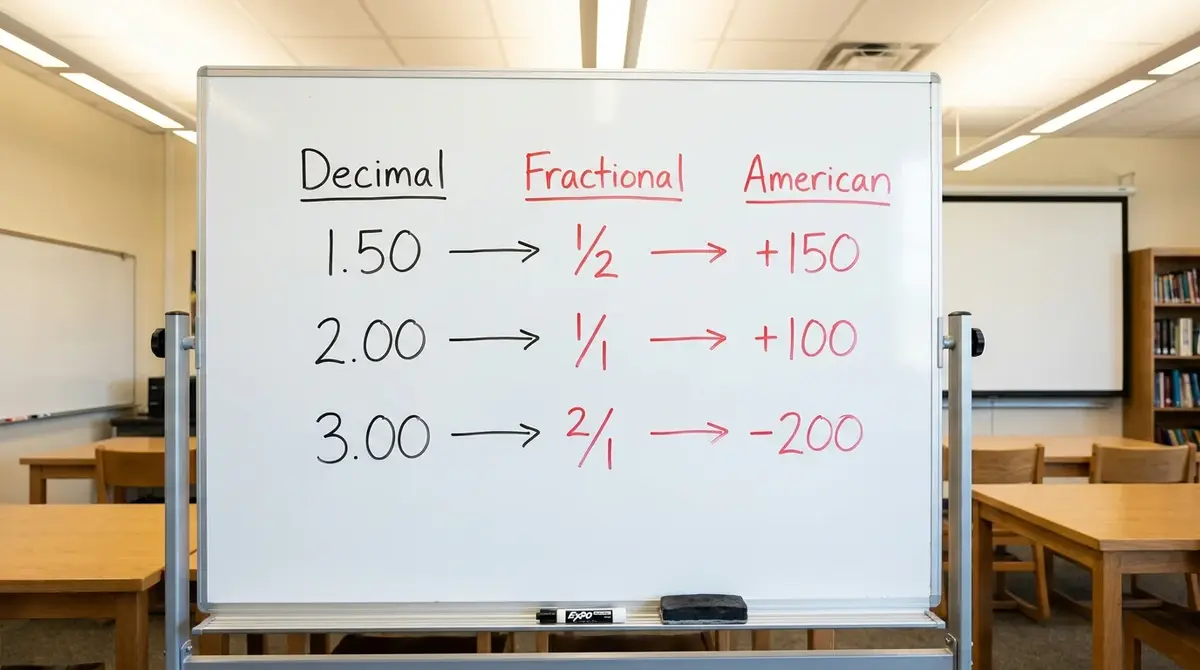
Implied probability converts odds into the percentage chance of an outcome occurring. Divide 1 by the decimal odds, then multiply by 100. Odds of 2.50 imply a 40% probability. Odds of 1.50 imply a 66.7% probability. Why does this matter? Because the bookmaker’s prices represent their assessment of likelihood. If you believe a team has a 50% chance of winning but the bookmaker’s implied probability is 40%, the odds are higher than the risk warrants — that’s the foundation of value betting, and even as a beginner, understanding this concept prevents you from blindly accepting every price offered.

The overround is the bookmaker’s margin. In a two-outcome market (Team A wins or Team B wins), the implied probabilities of both prices will add up to more than 100% — typically 105-110% in cricket. The excess is the bookmaker’s built-in profit. You can’t eliminate it, but you can minimise its impact by shopping for the best odds across multiple licensed operators before placing a bet.
Beginner-Friendly Markets: Where to Start
The match-winner market — simply picking which team will win — is where every beginner should start. It’s the most liquid market, the easiest to research, and the simplest to understand. You pick a team, the match plays out, and you either win or lose. No complicated settlement rules, no partial payouts, no confusion about dead-heat regulations.

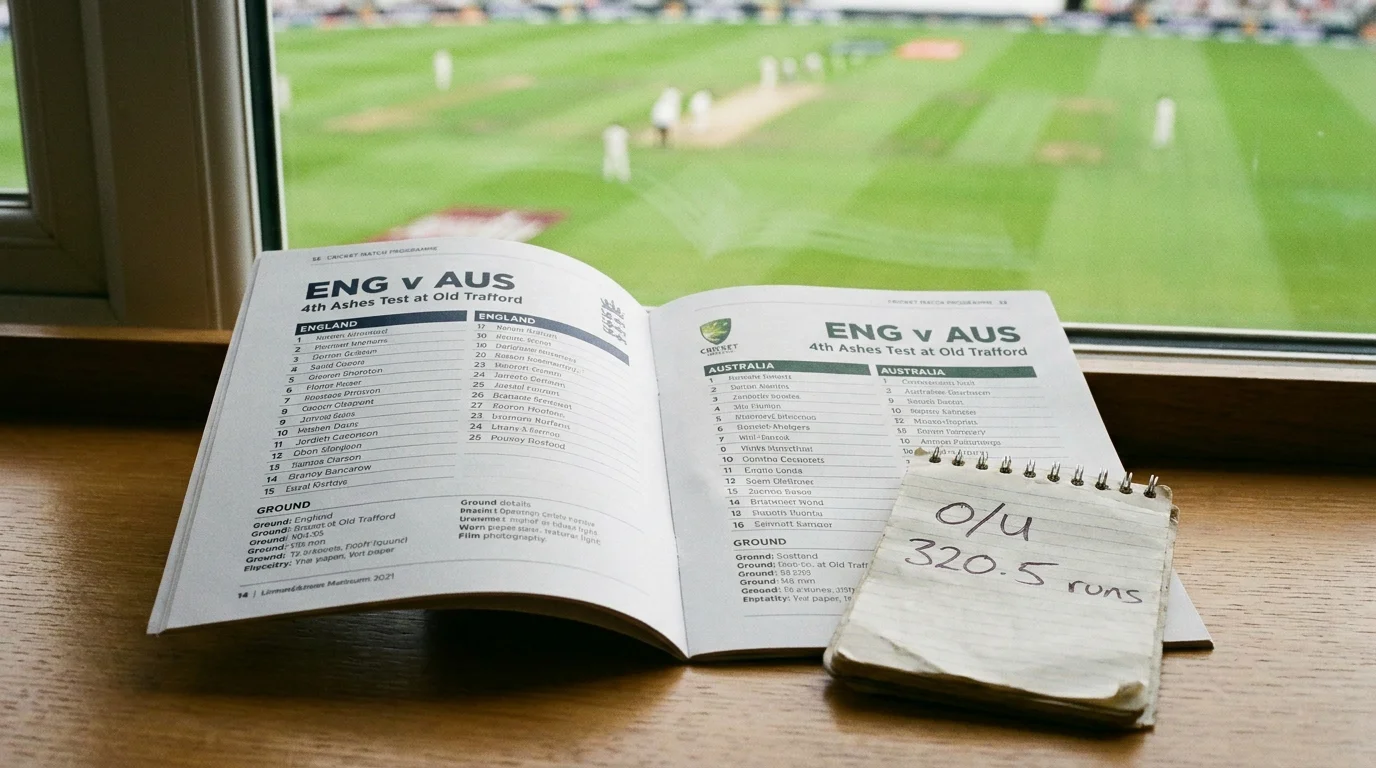
Once you’re comfortable with match-winner bets, over/under total runs is the natural next step. The bookmaker sets a line — say 320.5 total runs in an ODI — and you bet whether the actual total will be higher or lower. This market teaches you to think about conditions rather than just teams. A flat pitch, short boundaries, and a dew-heavy evening session all push totals higher. A green pitch, overcast skies, and strong bowling attacks push totals lower. Learning to assess conditions is the single most transferable skill in cricket betting.
Avoid accumulators as a beginner. They’re tempting because the combined odds look enormous — a four-leg acca at 25/1 feels like a route to a big payday. But each leg multiplies your risk, and a single incorrect prediction collapses the entire bet. Bookmakers promote accumulators aggressively because they carry the highest margin. Build your skills with single bets where you can track your accuracy and learn from each result without the noise of multi-leg outcomes obscuring your analysis.
Cricket Knowledge That Gives Beginners an Immediate Edge
You don’t need nine years of experience to make informed cricket bets. You need to understand three variables that casual bettors consistently ignore.
First, pitch conditions. Every cricket ground has a personality. Some produce high-scoring belters where 180 is a below-par T20 score. Others offer swing-friendly conditions where 150 is competitive. Before betting on any match, check the venue’s recent scoring history. If the last five T20s at that ground averaged 165, and the over/under line is set at 170.5, you have a data-informed starting point. Approximately 15% of the UK population follows cricket, but the majority of that audience doesn’t check pitch data before betting. That gap between what’s available and what’s used creates opportunity.

Second, format differences. Cricket has three professional formats — T20 (20 overs per side), ODI (50 overs), and Test (up to five days). Each format rewards different skills and produces different betting dynamics. T20 is fast, volatile, and rewards aggressive batting. ODIs are slower and more strategic. Tests are attritional and include the draw as a third outcome. A team that dominates T20 cricket might struggle in Tests, and vice versa. Never assume that a team’s quality in one format translates to another.
Third, team news. Late changes to the starting XI — a key bowler rested, a batsman promoted up the order, an unexpected debut — shift match probabilities. Most bookmakers adjust odds when team news drops, but the adjustment is often incomplete, particularly in secondary markets. Following team announcements 30-60 minutes before the match gives you an informational advantage over bettors who placed their wagers the night before.
Protecting Yourself: Responsible Betting from Day One
The number of children experiencing gambling-related harm doubled to approximately 85,000 in 2024 across the UK. That statistic should concern everyone in the betting ecosystem — and it underscores why responsible gambling practices aren’t optional, they’re essential. If you’re starting your betting journey, build the guardrails before you need them.
Set a bankroll — a fixed amount of money you’ve allocated specifically for betting and are prepared to lose entirely. Never bet with money earmarked for rent, bills, or other essentials. Your bankroll should be a discretionary leisure budget, treated with the same mindset as money spent on cinema tickets or restaurant meals. Once it’s gone, it’s gone. Developing a solid cricket betting strategy from the outset means treating your bankroll as the non-negotiable foundation of every decision.
Use the responsible gambling tools that every UKGC-licensed operator is required to provide: deposit limits, session time reminders, reality checks, and self-exclusion options. Setting a weekly deposit limit on Day 1 — before you’ve experienced a losing streak or an emotional tilt — is the most effective single action you can take. The limit removes the decision in the moment and protects you from the impulse to chase losses.

Record every bet. A simple spreadsheet with the date, match, market, odds, stake, and result gives you an honest picture of your performance. Most beginners overestimate their wins and underestimate their losses because memory is selective. The spreadsheet doesn’t lie. After 50 bets, review it. Are you profitable? Which markets perform best? Which ones cost you money? The data from your own betting history is more valuable than any tipster’s advice.
Cricket Betting for Beginners — Questions Answered
Articles
Written by the editors at cricketbettipsonline.com.
