

Test Match Betting Tips Start with Patience — the Market Rewards Those Who Wait
My most profitable Test match bet ever was one I didn’t place until the final session of Day 2. The team batting second had collapsed to 140/7 — the exchange odds on the team batting first had shortened to 1.30, and most punters assumed the match was over. But I’d tracked the pitch data, seen that Day 3 deterioration was slower than expected, and knew the lower order was capable of a rearguard. I laid the favourites at 1.30 and closed out the trade at 1.85 by tea on Day 3. Patience turned a nothing match into a 42% return.

Test cricket is the format that punishes reactive bettors and rewards those who understand its rhythms. A five-day match generates hundreds of odds fluctuations, and the vast majority of those movements are overreactions to short-term events — a flurry of wickets before lunch, a partnership that accelerates after tea. The bettors who profit from Tests are the ones who can distinguish between a genuine shift in match dynamics and temporary noise. Cricket accounts for 14% of all global betting activity, and within that share, Test matches produce some of the sharpest available edges because the extended format creates time for the market to misprice situations that won’t resolve for hours or even days.
The Draw Market: Test Cricket’s Hidden Value Engine
Here’s a question that separates Test bettors from limited-overs bettors: when did you last seriously consider betting the draw? Most punters ignore the third outcome entirely, treating it as a residual probability rather than an active selection. That neglect creates persistent value.
The draw is underbet for psychological reasons. Punters want a winner. They want the dopamine hit of picking a team and watching them triumph over five days. Backing the draw feels passive, uninspiring, even defeatist. But those emotional biases create a pricing gap. At many English venues, the draw historically occurs in 25-30% of Test matches. When the exchange prices the draw at implied probabilities of 15-18% on Day 1, you’re getting value before a ball is bowled.
Weather is the draw’s best friend. A forecast showing rain on Day 4 or Day 5 compresses the available playing time and increases the draw probability dramatically. I’ve backed draws at 4.00 on Day 1 when the five-day weather forecast showed persistent rain for the final two days — that’s a 25% implied probability when my assessment was closer to 40%. The key is acting before the rain arrives. Once Day 4 is washed out, the exchange draw price drops to 1.50, and the value has evaporated.

Flat pitches at specific venues also inflate draw probabilities. Rawalpindi, Christchurch, and certain Australian pitches produce high-scoring, slow-deteriorating surfaces where neither bowling attack can force results in five days. Knowing which venues historically produce drawn matches — and backing the draw early when the market underprices it — is one of the most reliable edges in Test betting.
Session Betting and the Rhythm of Five-Day Cricket
I think of a Test match as 15 mini-events — three sessions per day across five days. Each session has its own character, and the best Test bettors exploit the transitions between them.
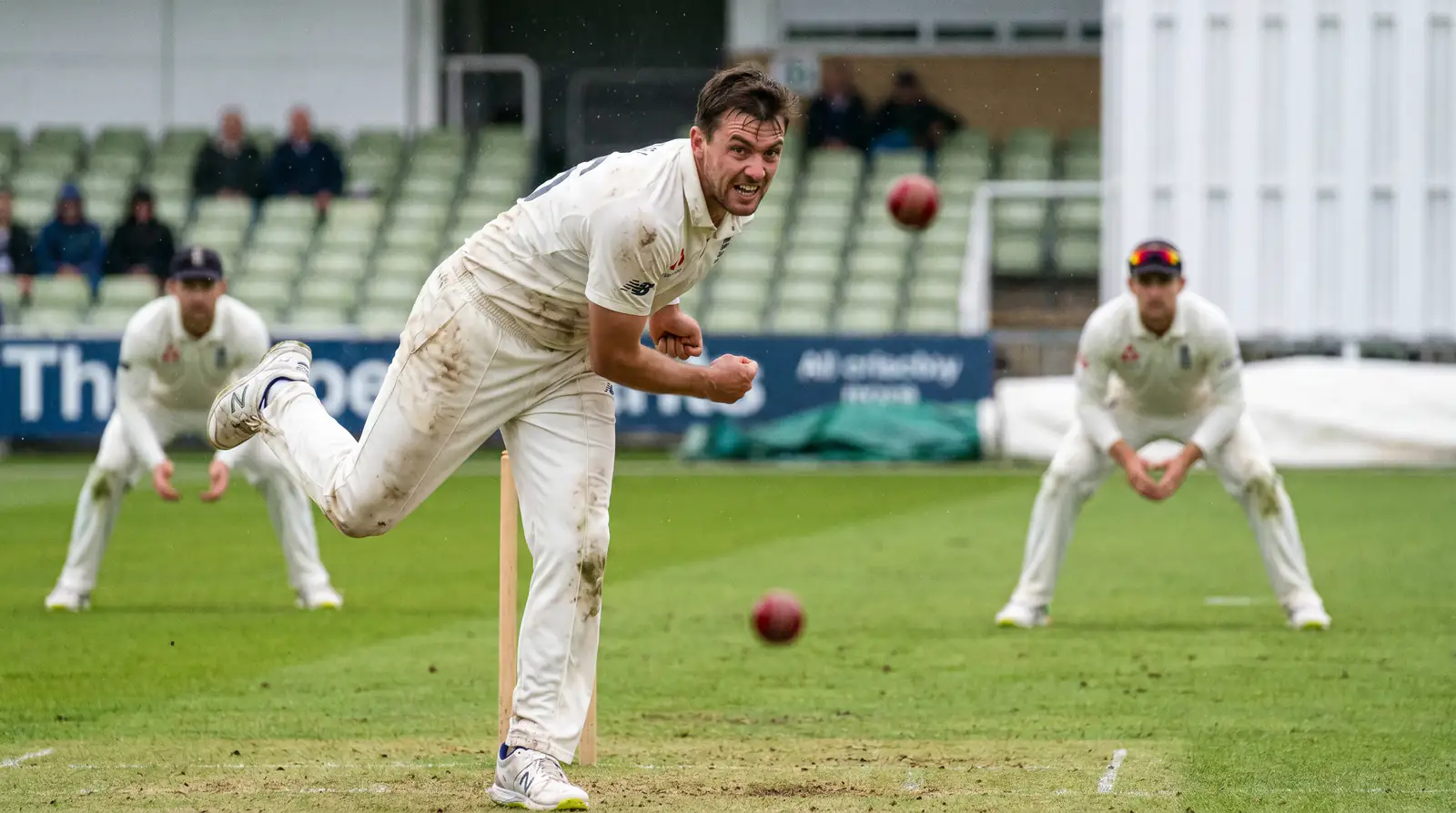
Morning sessions in England and New Zealand favour seam bowlers. The ball swings more in overcast, cooler conditions, and the pitch retains moisture from overnight dew. If the batting side survives the first session without losing more than one wicket, the afternoon session on a drying pitch will generally be easier for batting. This creates a specific pattern: back the bowling side before the morning session (when conditions favour them) and consider backing the batting side after lunch if they’ve weathered the early storm.
In the subcontinent, the dynamic reverses. Morning sessions on Day 1 and Day 2 are the best batting conditions — the pitch is firm, the ball doesn’t spin significantly, and the overhead conditions are typically clear. The danger for batsmen comes in the afternoon of Day 2 and throughout Day 3, when the pitch begins to crack and spinners extract turn. Timing your bets around this transition — backing the batting side in morning sessions and the bowling side in afternoon sessions on deteriorating pitches — exploits the rhythm that the market adjusts to too slowly.
Session-specific markets (runs in session, wickets in session) let you trade these rhythms directly. A session that’s expected to produce 80-90 runs on a flat Day 1 pitch in Brisbane should be traded differently from a session expected to produce 50-60 runs on a Day 4 crumbling pitch in Galle. The over/under lines for these sessions are set based on broad averages, not conditions-specific analysis, which is where your edge sits.
First-Innings Lead: The Strongest Predictor in Test Betting
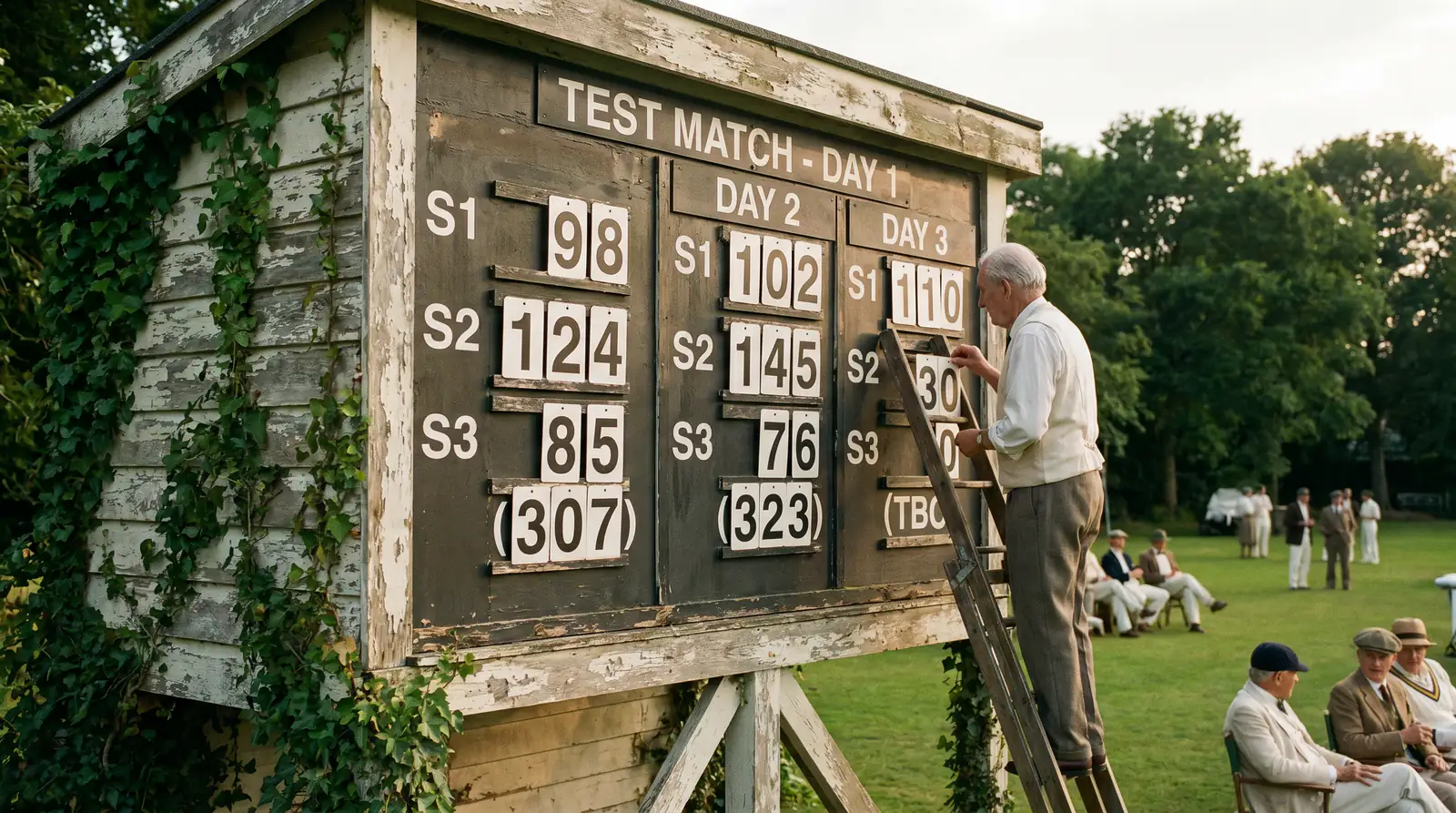
Forget batting averages, bowling strike rates, and team rankings for a moment. In Test cricket, the single most predictive variable for the match outcome is the first-innings lead. A team that secures a lead of 100 or more runs after both sides have batted once wins the match over 75% of the time. That statistic has held remarkably stable across eras, conditions, and continents.
The betting application is straightforward. Monitor the match through both first innings. Once the first-innings lead is established — say Team A leads by 120 runs — the exchange odds on Team A should reflect a 75-plus percent probability of victory. If they don’t — and on the exchange, they often lag because traders are slow to update during the second team’s first innings — there’s value in backing Team A before the market catches up.
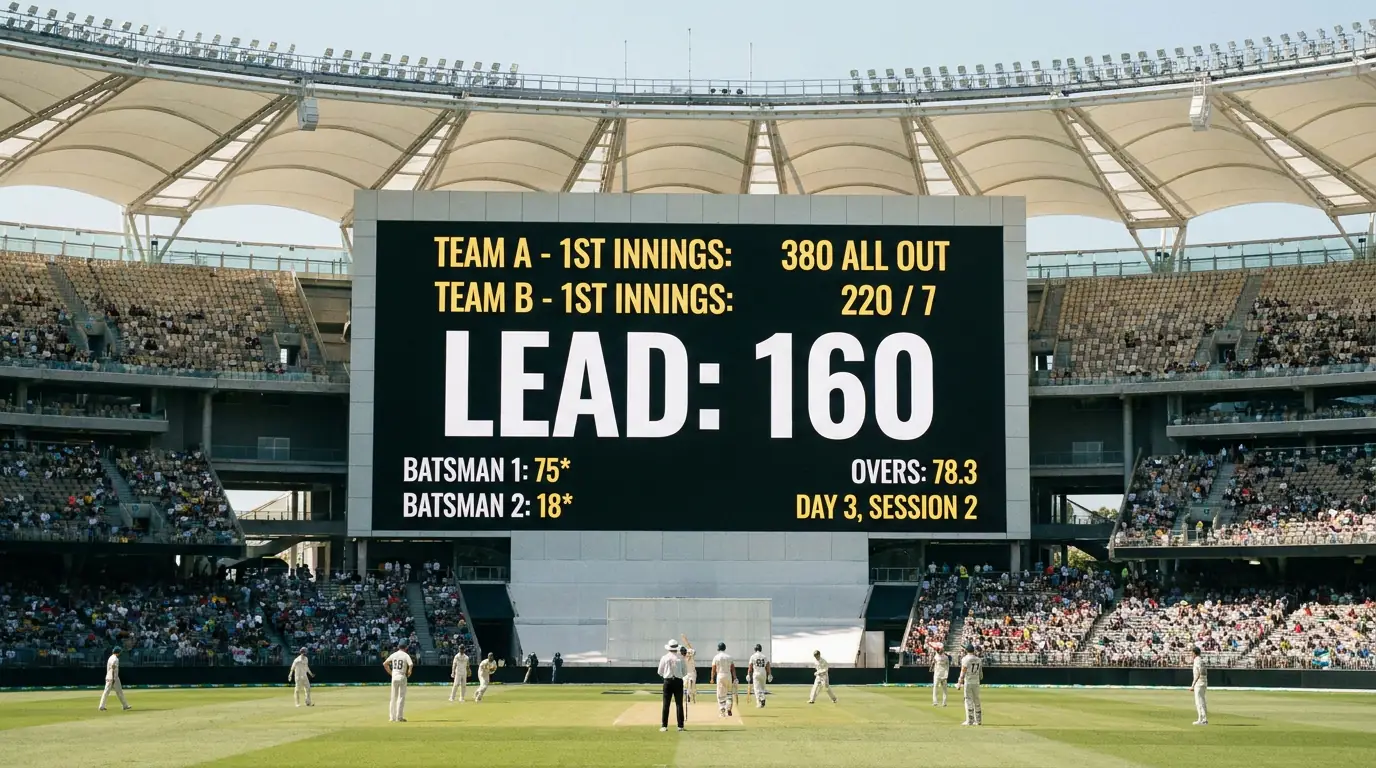
The best window for this trade is during the final 20-30 overs of the second team’s first innings. By that point, you can project the likely first-innings deficit with reasonable accuracy. If Team B are 220/7 chasing Team A’s 380, the deficit will be 100-plus runs. The exchange odds might still price Team A at 1.60 because the market waits for the innings to formally end. Backing at 1.60 when the true probability is 75-80% gives you an expected value edge of 20-plus percent — among the best opportunities in all of cricket betting.
Understanding how scoring methods and adjustments work in rain-affected matches adds another dimension to first-innings analysis, because a rain interruption can compress the remaining overs and alter the effective first-innings advantage.
Touring Teams, Conditions Adjustment, and Series Context
The in-play segment of cricket betting leads market share globally with a compound annual growth rate of 11.9%, and Test matches contribute disproportionately to that growth because the five-day format produces more live betting opportunities per match than any other cricket format.
Touring teams in Test cricket follow a predictable adjustment curve. In the first Test, they’re adapting to unfamiliar conditions — different ball behaviour, different pitch characteristics, different altitude and humidity. By the third Test, that adaptation is largely complete. The betting implication is clear: back the home team more aggressively in the first Test of a series and reassess by the third, when the touring side has acclimatised.
Series context also matters for individual Test betting. When a series is already decided — one team leads 3-0 with two to play — the trailing team often performs better in the remaining dead rubbers. The pressure lifts, fringe players get opportunities and play freely, and the dominant side sometimes rests key players. Dead-rubber Tests produce more draws and more upsets than live-series Tests, and the market doesn’t always account for this psychological shift. If a dominant team is priced at 1.40 in a dead rubber, the value usually sits on the draw or the underdog.

Test Match Betting Tips — Questions Answered
Articles
Published by the cricketbettipsonline.com team.
